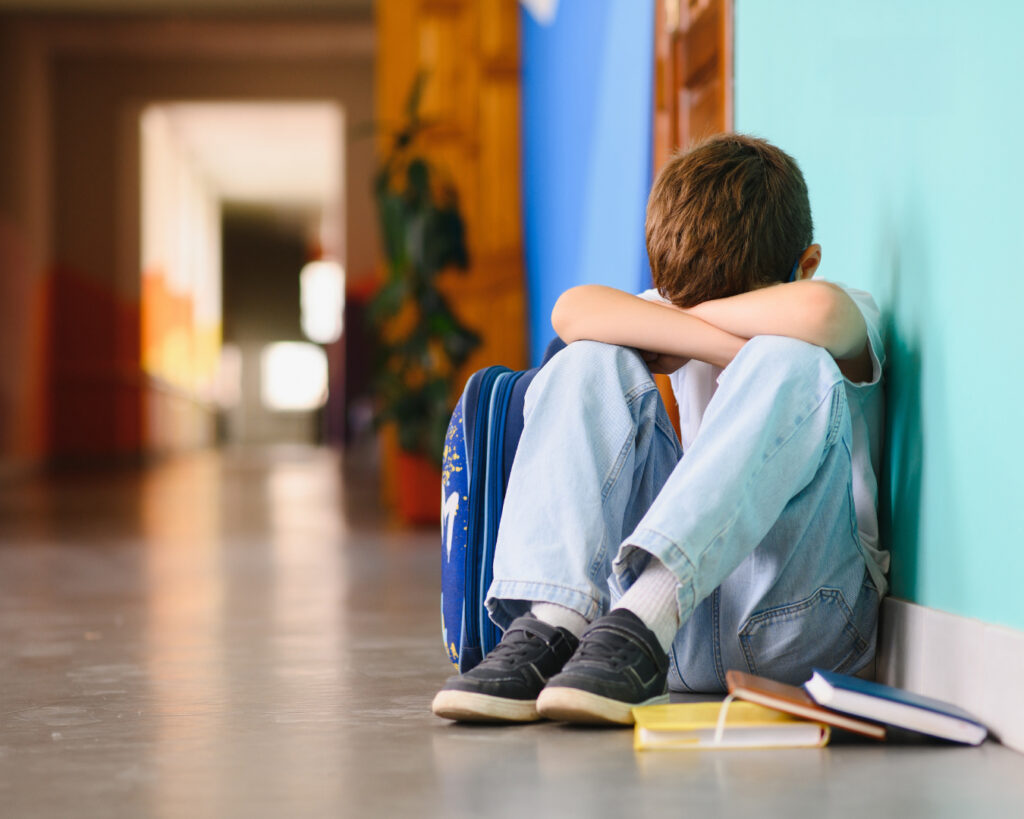
Few things hit parents harder than finding out their child is being bullied.
Your stomach drops. Your mind races. You want to fix it immediately by calling the school, calling the other parents, and demanding it stop. At the same time, you’re terrified of making it worse. You don’t want your child labeled. You don’t want retaliation. You don’t want them to feel fragile or incapable.
And let’s be honest… bullying today isn’t what it was when we were kids. There’s no escape. It follows children into their phones, their bedrooms, and their downtime. There’s no off switch.
If your child is being bullied, this post will help you shift from panic to leadership. I’m going to walk you through how to prepare your child, strengthen them emotionally, and support them without overreacting or underreacting. You don’t need to eliminate discomfort to raise a confident child – you need a plan.
Bullying Isn’t Something You Can Always Prevent, But You CanPrepare Your Child
Bullying has sadly become a rite of passage for many kids. I don’t know many adults (myself included) who didn’t experience it in some way. Several of my own kids have experienced it too.
The biggest difference between bullying then and now is reach. When I was a kid, I could come home and escape it. Today, bullying follows kids everywhere – online, through their phone, and into their bedrooms.
Here’s the reframe every parent needs to hear:
Ignoring is not a strategy.
Reporting is not a plan.
But training is.
Kids who handle bullies well aren’t tougher. They’re prepared in advance.
Why Bullying Is So Hard on Parents
Bullying triggers everything at once: fear, anger, sadness, urgency, and helplessness. Parents are usually afraid of two things at the same time: doing too little and doing too much.
But here’s the hard truth…you cannot eliminate all discomfort for your child. And you cannot stop bullying altogether.
And that’s not the goal. The goal is to raise a child who feels anchored, supported, and capable, not fragile or fearless, but grounded. That starts at home.
Pillar One: Family Is the Anchor When Bullies Show Up
A child’s home is their safe base. It’s where your child knows they’re valued, protected, and not alone. When family is strong, outside noise loses power.
Why Kids Don’t Always Tell Parents About Bullying
Kids stay quiet because of:
- Embarrassment and shame
- Worry that parents will panic or take over
- Not knowing how to explain what’s happening
Silence doesn’t mean nothing is wrong. It often means, “I don’t know how to handle this yet.”
Before kids can talk to us, they need to know:
- I won’t get in trouble for telling the truth
- My parents won’t overreact
- I’m not alone
That safety doesn’t start when bullying happens. It’s built long before.
How Parents Build Safety at Home
Kids open up when parents stay regulated. When we’re calm, curious, and shock-proof, our kids borrow that calm. When we panic, they borrow that panic too.
Training conversations matter. Talk about bullying before it happens:
- Share your own experiences
- Normalize that this is part of life
- Talk through scenarios ahead of time
Prepared kids don’t freeze. They think, pause, and choose.
Pillar Two: Teaching Empathy Without Excusing Behavior
This might surprise you, but the second pillar isn’t empathy for your child, it’s empathy for the bully.
Hurt people hurt people.
Bullying is often about fear, insecurity, or chaos in someone else’s life. Understanding that doesn’t excuse the behavior, but it keeps kids from internalizing it.
How Empathy Changes the Power Dynamic
When kids understand that bullying usually isn’t personal, shame loosens its grip. Emotional distance forms. Perspective grows.
Sometimes a simple response to bullying like, “Are you okay?” completely shifts the interaction. It signals that the behavior is odd (not powerful) and removes the payoff for the bully.
I’ve seen situations where empathy alone transformed the relationship entirely.
What If Your Child Is the One Bullying?
This matters.
If your child is misbehaving, it doesn’t mean you’ve failed. A misbehaving child is a discouraged child.
This isn’t the time for punishment, it’s time for curiosity. What’s going on behind the behavior? What’s missing? What needs support?
Accountability matters, but so does understanding. Teaching kids to own mistakes, apologize, and repair relationships builds integrity, not fear.
Pillar Three: Neutrality Is a Skill That Changes Everything
Neutrality is not a weakness. It’s regulation.
Bullies want attention and reaction. Neutral responses remove the oxygen.
What Neutral Responses Look Like
Simple, calm, and rehearsed.
- “Okay.”
- Shoulder shrug.
- Walk away.
No explaining. No defending. No tone.
Walking away isn’t avoidance, it’s leadership. It says, “I decide what gets my energy.”
Why Practicing Ahead of Time Matters
When kids practice neutral responses before emotions take over, their bodies know what to do. The power dynamic collapses. Confidence grows.
This skill carries far beyond bullying into friendships, relationships, and future workplaces.
Teaching Kids When and How to Involve Adults
Leadership parenting respects timing.
Jumping in too fast can feel like rescuing and disrespect. It sends the message, “I don’t trust you to handle this.”
We step back when:
- The child is safe
- Discomfort is manageable
- Their strategies are working
We step in when:
- There’s a power imbalance
- Bullying is repeated or escalating
- Cyberbullying is involved
- Emotional wellbeing is deteriorating
How Kids Should Report Bullying
Specific language creates action.
Instead of:
“Tommy is being mean to me.”
Teach kids to say:
“When Tommy says ___, I feel unsafe. What’s your plan?”
That clarity changes how adults respond.
Supporting Kids Through Mean Girl Dynamics and Exclusion
When my daughter experienced exclusion, instead of trying to replace her friends, I became her safe person.
We spent intentional one-on-one time together. We created rituals. I reinforced her worth outside of school dynamics.
Why Pointing Kids Toward a Bigger World Matters
Kids busy becoming themselves stop chasing people who don’t see their value.
Sports. Volunteering. Jobs. Passion projects. New environments.
And just as important, teaching kids how to be alone. Solitude builds clarity. It strengthens the inner voice and reduces dependency on outside approval.
The Long Game of Parenting Through Bullying
Bullying hurts but it doesn’t get to define your child.
The goal isn’t to remove hard moments. It’s to raise kids who:
- Trust themselves
- Can disengage without collapsing
- Know when to seek help
- Feel deeply anchored at home
Strong families, empathy, and preparation are things bullies can’t touch.
If bullying is triggering fear, anger, or yelling in your home, you don’t have to figure this out alone.
Join my private Facebook group, Yell-Free Parenting for Exhausted Moms.
It’s a supportive, judgment-free space where parents are learning how to stay calm, break old patterns, and lead their families with confidence, even during hard moments like this.
You’ll get practical tools, real-life guidance, and support from parents who get it.
You don’t have to carry this alone.